
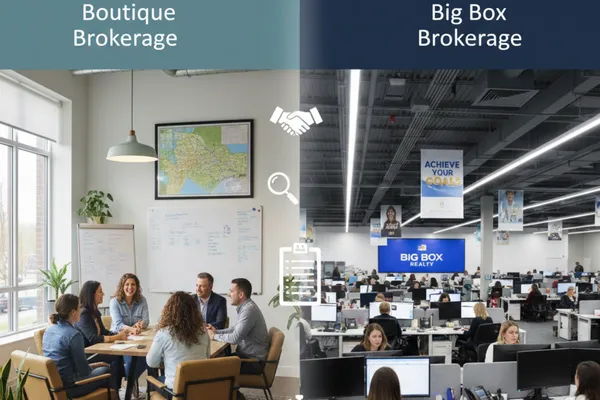
Boutique Brokerage vs Big Box Brokerage: What’s the Real Difference for Realtors?
Boutique Brokerage vs Big Box Brokerage: What’s the Real Difference for Realtors?
When realtors start thinking about changing brokerages, this is one of the most common comparisons they make:
Boutique brokerage vs big box brokerage.

On the surface, the difference can seem obvious — size, branding, name recognition. But the real differences show up in day-to-day work, support, and how your business actually feels to run.
If you’re a realtor trying to decide which model is the right fit, this breakdown will help you look beyond the surface.
A Quick Introduction
I’m Victoria Leahy, a Realtor and Director of Agent Services at Realty World Legacy.
I work closely with realtors who are evaluating different brokerage models — especially those considering a change — helping them understand how boutique and big box brokerages actually function in real life, not just on paper.
This is a conversation I have often with agents across Burlington, Hamilton, and throughout Ontario.
Big Box Brokerages: Structure at Scale
Big box brokerages are typically:
Large, high-volume offices
Highly branded
Built to support a wide range of agent experience levels
For some agents, this structure works well — especially those who prefer independence and already have established systems.
However, at scale, support can sometimes feel:
Less personal
More generalized
Harder to access quickly
The experience often depends on how proactive an agent is comfortable being.
Boutique Brokerages: Intentional by Design
Boutique brokerages are usually:
Smaller by choice
More hands-on
Built around support, mentorship, and accessibility
Instead of managing volume, boutique brokerages often focus on:
Practical training
Clear systems
Ongoing guidance
This difference is felt most when agents are navigating real situations — not theory.
The Real Differences Realtors Notice
The difference between boutique and big box brokerages usually isn’t about quality — it’s about experience.
Access to Support
Big box: support is often structured, scheduled, or ticket-based
Boutique: support is typically more immediate and relationship-driven
Training Style
Big box: broader, one-size-fits-many training
Boutique: tailored to real files and real situations
Culture
Big box: professional, independent, performance-driven
Boutique: collaborative, supportive, growth-focused
Neither model is wrong — but they feel very different to work in.
Which Model Is Right for You?
The better question isn’t which model is better — it’s which model fits you.
Ask yourself:
Do I want hands-on guidance or full independence?
Do I learn best through mentorship or self-direction?
Do I want flexibility, structure, or a balance of both?
Your answers matter more than the brand name on the door.
Why Realtors Revisit This Question
Many agents don’t start their careers knowing which model suits them best.
They revisit this comparison when:
They feel unsupported
They want clearer systems
They’re ready for growth at a different pace
Re-evaluating your brokerage isn’t failure — it’s awareness.
Final Thought
Boutique and big box brokerages both serve a purpose in real estate.
The key is choosing the environment that supports how you work, how you learn, and what you want next in your career.
Clarity leads to confidence — and confidence leads to better decisions.
🔗 Continue Reading for Realtors
If you’re exploring brokerage options and comparing different models, these posts may help:
When Should a Realtor Change Brokerages? Signs It Might Be Time
Thinking About Changing Real Estate Brokerages? What Realtors Should Know First
Why Realtors Change Brokerages (And What Most Don’t Talk About)
You can also browse more real-world guidance here:
👉 https://victoria.realtyworldlegacy.ca/blogs
🔗 Connect With Me
If you’re a realtor thinking about your next move or you want honest, real-world conversations about the business, you can connect with me here:
Victoria Leahy
Realtor & Director of Agent Services, Realty World Legacy
https://victorialeahy.ca


